by Pier Paolo Maccarrone
Context
Rossini composed Une larme in 1858 as a “Thème et variations” for double bass and piano, in memory of a deceased friend. The piece was later transcribed for cello and piano, where it finds a particularly natural voice. It is part of his Péchés de vieillesse (“Sins of Old Age”), a collection of intimate, ironic, and melancholic salon pieces composed after his retirement from the opera house.
The title, Una lacrima, suggests a short and meditative piece, imbued with a sweet melancholy.
Structure and Musical Characteristics
1. Introduction (Pianissimo, simple and sorrowful)
The piano opens with soft, delicate chords, like a held breath.
The cello enters with a simple song, almost a human voice, evoking an intimate and restrained lament.
2. Main Theme
It is a linear melody, devoid of virtuosity, which proceeds calmly and thoughtfully.
The atmosphere is intimate: more of a private confession than a dramatic scene.
3. Variations
Rossini offers small variations on the theme, enriching the discourse with ornaments, modulations, and more intense accents.
The cello alternates broader, more singable phrases with more agitated moments, almost as if the suppressed emotion were trying to break through.
4. Conclusion
After a brief emotional crescendo, the piece concludes with a return to calm, leaving a suspended feeling of sweet sadness.
It is as if the “tear” evoked by the title remains suspended in the air, without falling completely.
What to listen for
The timbre of the cello: warm and human, here it becomes a narrative voice, capable of suggesting both tears and consolation.
The dialogue with the piano: it is not merely accompaniment, but a participant, supporting the singing and creating an atmosphere of meditation.
The expressive simplicity: Rossini forgoes the virtuosity typical of opera to rely on a sober writing style, in which every note is charged with meaning.
The contrast between quiet and intensity: the piece alternates contemplative moments with more lively passages, conveying the emotional complexity of a painful memory.
Why it’s special
Une larme shows a Rossini different from the operatic one: no longer the brilliant composer of The Barber of Seville, but a composer who reflects on life and death with intimacy and delicacy.
For the cello, this piece is a small gem of lyricism and introspection, a perfect example of its ability to sing like a human voice.
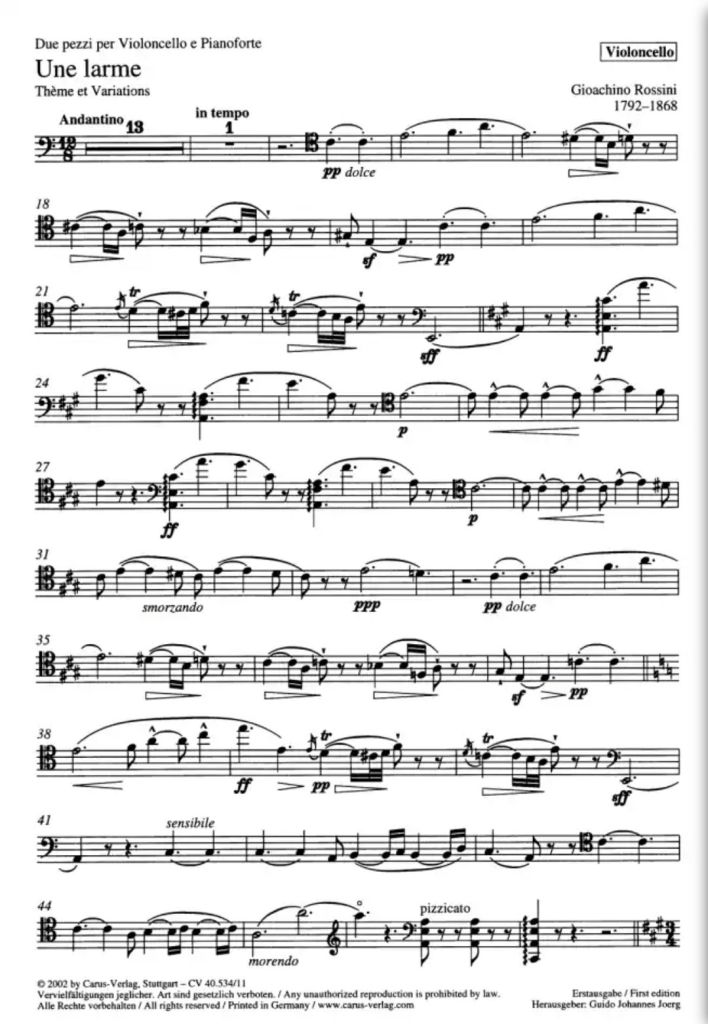
Gioachino Rossini – Une larme per violoncello e pianoforte
Contesto
Rossini compose Une larme nel 1858 come “Thème et variations” per contrabbasso e pianoforte, in memoria di un amico defunto. Successivamente, il brano è stato trascritto anche per violoncello e pianoforte, dove trova una voce particolarmente naturale. Fa parte dei suoi Péchés de vieillesse (“Peccati di vecchiaia”), raccolta di pezzi da salotto intimi, ironici e malinconici, composti dopo il ritiro dal teatro d’opera.
Il titolo, Una lacrima, lascia intuire un brano breve e meditativo, intriso di una dolce malinconico.
Struttura e caratteristiche musicali
1. Introduzione (Pianissimo, semplice e dolente)
Il pianoforte apre con accordi sommessi e delicati, come un respiro trattenuto.
Il violoncello entra con un canto semplice, quasi una voce umana, che evoca un lamento intimo e contenuto.
2. Tema principale
È una melodia lineare, priva di virtuosismi, che procede con calma e raccoglimento.
L’atmosfera è intima: più una confessione privata che una scena drammatica.
3. Variazioni
Rossini propone piccole variazioni sul tema, arricchendo il discorso con ornamenti, modulazioni e accenti più intensi.
Il violoncello alterna frasi più ampie e cantabili a momenti più agitati, quasi come se la commozione trattenuta cercasse di farsi strada.
4. Conclusione
Dopo un breve crescendo emotivo, il brano si chiude in un ritorno alla calma, lasciando sospesa una sensazione di dolce tristezza.
È come se la “lacrima” evocata dal titolo restasse sospesa nell’aria, senza cadere del tutto.
Cosa ascoltare
Il timbro del violoncello: caldo e umano, qui diventa voce narrante, capace di suggerire pianto e consolazione insieme.
Il dialogo col pianoforte: non è mero accompagnamento, ma partecipe, sostenendo il canto e creando l’atmosfera di raccoglimento.
La semplicità espressiva: Rossini rinuncia al virtuosismo tipico dell’opera per affidarsi a una scrittura sobria, in cui ogni nota è carica di significato.
Il contrasto tra quiete e intensità: il brano alterna momenti contemplativi a passaggi più mossi, restituendo la complessità dell’emozione di un ricordo doloroso.
Perché è speciale
Une larme mostra un Rossini diverso da quello operistico: non più il brillante autore di Il Barbiere di Siviglia, ma un compositore che riflette sulla vita e sulla morte con intimità e delicatezza.
Per il violoncello, questo brano è un piccolo gioiello di lirismo e introspezione, perfetto esempio della sua capacità di cantare come una voce umana.
Good listening! ❤️🎻🎵🎧↙️
 Pier Paolo Maccarrone