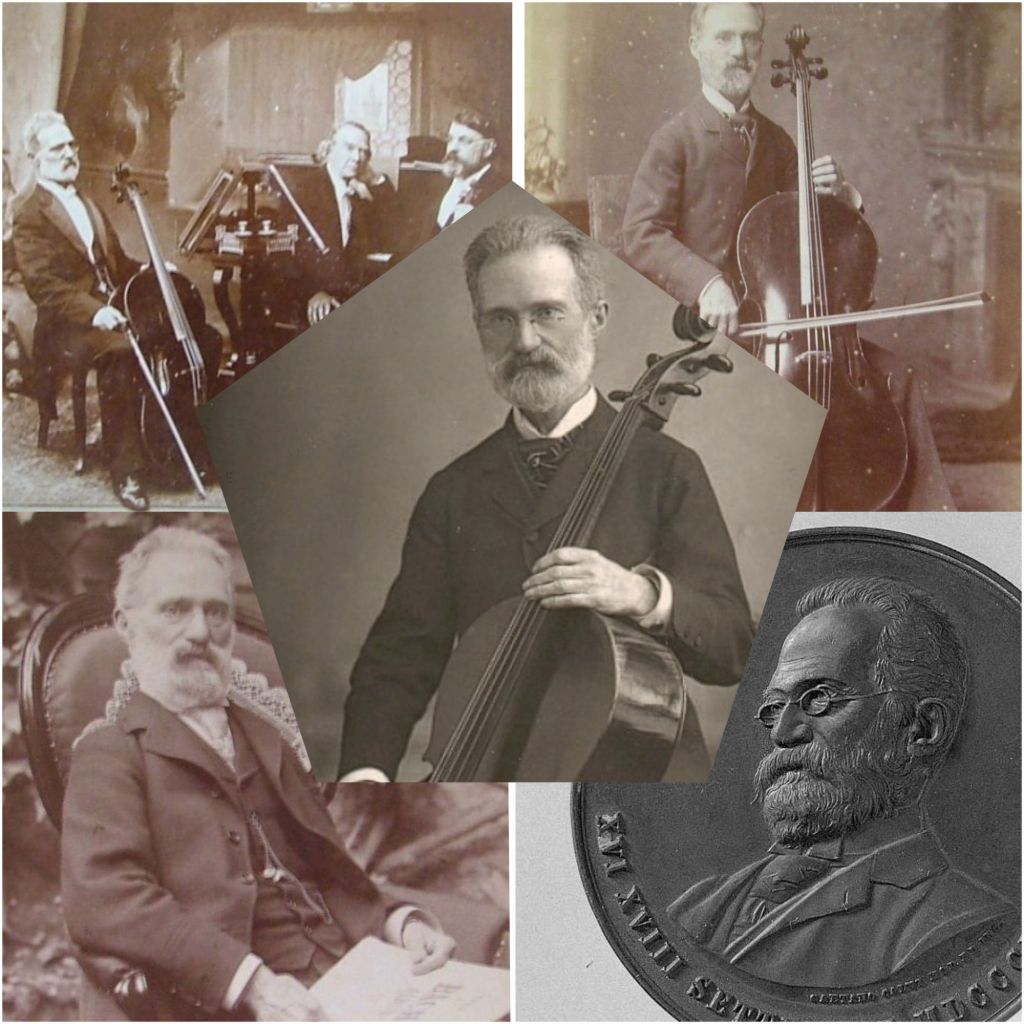
July 18 this year marked the 123rd anniversary of the death of Alfredo Carlo Piatti, the famous virtuoso cellist of the 17th century. He was born in Bergamo, in Borgo Canale, a few steps from Donizetti’s house, on 8 January 1822. Il 18 luglio di quest’anno è ricorso il 123o anniversario della morte di Alfredo Carlo Piatti, celebre virtuoso violoncellista del 17o secolo. Nacque a Bergamo, in Borgo Canale, a pochi passi dalla casa di Donizetti, l’8 gennaio 1822.

He began studying the cello at the age of 5, under the guidance of an elderly uncle. At 10 he moved to the Milan Conservatory, where he remained until he was 15. Having completed his studies brilliantly, he easily obtained a job as a cellist in Bergamo in the orchestras of the Teatro Sociale, the Teatro Riccardi and the Basilica of S. Maria Maggiore, where he had already served as a child, alongside and then replacing his teacher. Intraprese lo studio del violoncello a 5 anni, sotto la guida di un anziano zio. A 10 anni si trasferì al Conservatorio di Milano, dove rimase fino ai 15 anni. Terminati brillantemente gli studi, ottenne senza difficoltà un lavoro come violoncellista a Bergamo nelle orchestre del Teatro Sociale, del Teatro Riccardi e della Basilica di S. Maria Maggiore, dove aveva prestato servizio già da bambino, affiancando e poi sostituendo il suo maestro.
It was probably Giovanni Simone Mayr who pushed him to accept his first engagements outside the walls of his city: at the Teatro Regio in Turin and at the Teatro Carcano in Milan. In 1843 he began a concert tour which offered him the opportunity to have his talent appreciated throughout Europe and to meet musicians such as Liszt, Mendelssohn, Meyerbeer and Servais. After playing in Vienna, Berlin, Paris, Warsaw, Moscow and St. Petersburg, rich in experience and recognition, he chose to settle permanently in London, where he had been offered the position of first cellist in Her Majesty’s orchestra s Theatre. After the first years of work in the orchestra, he chose to dedicate himself to the genre of music he preferred: chamber music. For more than fifty years, in the seasons of the Musical Union, the Quartett Society and in the Popular Concerts, he played the wonderful Stradivarius cello that one of his London admirers had given him, collaborating with the greatest performers of his time: Joseph Joachim, Clara Schumann , Giovanni Bottesini, Giuseppe Martucci, Charles Hallé, Anton Rubinstein. Fu probabilmente Giovanni Simone Mayr a spingerlo ad accettare i primi ingaggi fuori dalle mura della sua città: al Teatro Regio di Torino ed al Teatro Carcano di Milano. Nel 1843 iniziò una tournée concertistica che gli offrì l’opportunità di far apprezzare il suo talento in tutta Europa e di conoscere musicisti come Liszt, Mendelssohn, Meyerbeer e Servais. Dopo aver suonato a Vienna, Berlino, Parigi, Varsavia, Mosca e S.Pietroburgo, ricco di esperienza e di riconoscimenti, scelse di stabilirsi definitivamente a Londra, dove gli era stato offerto il posto di primo violoncello nell’orchestra del Her Majesty’s Theatre. Dopo i primi anni di lavoro in orchestra, scelse di dedicarsi al genere di musica che preferiva: la musica da camera. Per più di cinquant’anni, nelle stagioni della Musical Union, della Quartett Society e nei Popular Concerts, suonò il meraviglioso violoncello Stradivari che uno dei suoi ammiratori londinesi gli aveva regalato, collaborando con i maggiori interpreti del suo tempo: Joseph Joachim, Clara Schumann, Giovanni Bottesini, Giuseppe Martucci, Charles Hallé, Anton Rubinstein.
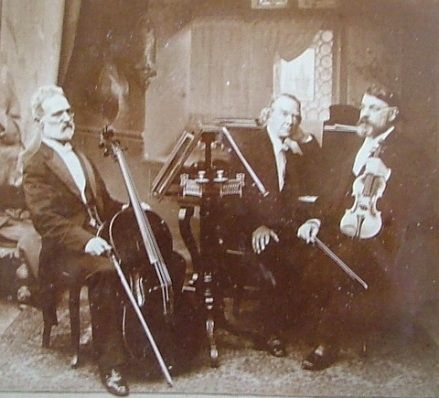
Since his years at the Conservatory, he has combined his concert activity with his activity as a composer. On 25 September 1937, Alfredo Piatti, having finished his studies, took leave of the Milan Conservatory by performing a cello concerto of his own composition. The critic of the Allgemeine Musikalische Zeitung felt obliged to point out the young cellist to his readers because “he possesses an exceptional talent in playing the cello and shows himself to be such that it is thought he will become the Paganini of the cello”.
Fin dagli anni del Conservatorio, affiancò all’attività concertistica l’attività di compositore. Il 25 settembre 1937, Alfredo Piatti, terminati gli studi, si congedò dal Conservatorio di Milano eseguendo un concertino per violoncello di sua composizione. Il critico della Allgemeine Musikalische Zeitung si sentì in dovere di segnalare il giovane violoncellista ai suoi lettori perché “egli possiede un eccezionale talento nel suonare il violoncello e si mostra tale che si pensa diventerà il Paganini del violoncello”.

A few months later a Milanese critic highlighted as his qualities on the one hand the strength, creativity, spontaneity and clarity of notes, on the other the ability to transform the sound of the cello into a human voice, making it sing to find with ease the way of the heart. In the criticism of the following years, the word that occurs most frequently is perfection, but what amazes the critics most is not so much the technical ability, but the spontaneity and naturalness that Piatti demonstrates, especially in his mature years. Pochi mesi dopo un critico milanese mise in luce come sue doti da un lato la forza, l’estro, la spontaneità e la chiarezza di note, dall’altro la capacità di trasformare il suono del violoncello in voce umana, facendolo cantare per trovare con facilità la via del cuore. Nelle critiche degli anni seguenti la parola che ricorre con maggior frequenza è perfezione, ma ciò che stupisce maggiormente i critici non è tanto la capacità tecnica, quanto la spontaneità e naturalezza di cui Piatti dà prova, soprattutto negli anni della maturità.
“Commendatore Piatti, placid, calm, self-confident, without ever any of those contortions of the person, which are the distinctive flaw of many Italian concert performers, serenely overcomes the most difficult difficulties and, despite his years, which are well over seventieth, he demonstrates an energy and strength that young people often lack, but what makes him the greatest cellist in all of Christianity is his sobriety and style”. “Il commendator Piatti, placido, tranquillo, sicuro, senza mai alcuno di que’ smancerosi contorcimenti della persona, che sono pecca distintiva di molti fra i concertisti italiani, supera serenamente le più accidentate difficoltà ed, a malgrado gli anni, che oltrepassano il settantesimo, dà prova di una energia e di una forza, che mancano ai giovani spesso, ma ciò che fa di lui il più grande violoncellista di tutta la cristianità è la sobrietà e lo stile”.
Piatti’s evolutionary path as a composer runs parallel to his maturation process as an interpreter. From virtuosic pieces, composed in the years of his youth, we move on to compositions in which the technical difficulties, although always present, become more refined, original and expressive. In the compositions of his maturity, a clarity in the structuring of melodic thought with great communicative effect gradually asserts itself.
In over sixty years of activity, Piatti composed, in addition to the very famous Capricci for cello – a testing ground for cellists from all over the world – around seventy instrumental pieces (including 6 Sonatas for cello and piano, 2 Concertos and a Concertino for cello and orchestra and many fantasies on opera arias or popular themes), around sixty romances for voice, cello and piano (on Italian, English, French and German texts) and around forty transcriptions or reworkings of works by great authors of the past. Il percorso evolutivo del Piatti compositore corre parallelo al suo processo di maturazione come interprete. Dai pezzi virtuosistici, composti negli anni della giovinezza, si passa a composizioni in cui le difficoltà tecniche, pur sempre presenti, diventano più raffinate, originali ed espressive. Nelle composizioni della maturità si afferma poi gradualmente una nitidezza nella strutturazione del pensiero melodico di grande effetto comunicativo.
In oltre sessant’anni di attività, Piatti compose oltre ai famosissimi Capricci per violoncello – banco di prova per i violoncellisti di tutto il mondo- una settantina di pezzi strumentali (fra i quali 6 Sonate per violoncello e pianoforte, 2 Concerti ed un Concertino per violoncello ed orchestra e molte fantasie su arie d’opera o temi popolari), una sessantina di romanze per voce, violoncello e pianoforte (su testi italiani, inglesi, francesi e tedeschi) e una quarantina di trascrizioni o rielaborazione di opere di grandi autori del passato.
In 1856, in Wolchester, he married Mary Ann Lucy Welsh, only daughter of Thomas Welsh, a singing professor, with whom he had a daughter. The relationship ended a few years later with a separation. Until 1898 Piatti lived in London where he performed in numerous concerts with musicians of great caliber such as Camillo Sivori, Giovanni Bottesini, Clara Schumann, Charles Hallé, Heinrich Ernst and Henri Vieuxtemps, obtaining numerous international honors and recognitions.
In 1868 he purchased a villa in Cadenabbia, where he spent the summer with his daughter and grandchildren. He died in Mozzo, in the home of his daughter Rosa, on 18 July 1901.
Almost all of his autograph manuscripts and editions of his compositions are collected in the Piatti-Lochis Fund, currently preserved at the Gaetano Donizetti Library in Bergamo. Nel 1856, a Wolchester, si sposò con Mary Ann Lucy Welsh, unica figlia di Thomas Welsh, professore di canto, dalla quale ebbe una figlia. Il rapporto terminò qualche anno più tardi con una separazione. Fino al 1898 Piatti visse a Londra dove si produsse in molteplici concerti con musicisti di grande spessore quali Camillo Sivori, Giovanni Bottesini, Clara Schumann, Charles Hallé, Heinrich Ernst e Henri Vieuxtemps, ottenendo numerosi onori e riconoscimenti internazionali.
Nel 1868 acquistò una villa a Cadenabbia, dove trascorreva l’estate con la figlia ed i nipoti. Morì a Mozzo, in casa della figlia Rosa, il 18 luglio 1901.
Quasi tutti i manoscritti autografi e le edizioni delle sue composizioni sono raccolti nel Fondo Piatti-Lochis, attualmente conservato presso la Biblioteca Gaetano Donizetti di Bergamo.

Courante from II Suite for cello unaccompanied in D minor BWV 1008
Pier Paolo Maccarrone, cello.
#cello #bach #classicalmusic #maccarronecello #CMISSchool #celloplayer #bach #musica #cellomusic #maccarronecellist #music #cellistoftheworld #violoncello #violoncelle #celloteacher #cellolove #cellosolo #courant #corrente #baroque #baroquemusic
🎼C.M.I.S CELLO AND MUSIC INTERNATIONAL SCHOOL ↙️
https://pierpaolomaccarrone.com/c-m-i-s-cello-music-international-school/
INFO: +39 349446064
✅Basic, Intermediate and Advanced Cello Lessons
✅ Trinity College London certifications up to LCTL degree
✅ Music Theory Certifications (Theory Grade)
✅ Digital Exams
✅ Baroque Cello Lessons
✅ Suzuki Cello Lessons
✅ Viola da gamba lessons
✅ Orchestra Conducting Lessons
✅ Musical preparatory courses
✅ Courses, Concerts, Masters and Seminars
✅Lezioni di Violoncello Base, Intermedio e Avanzato
✅ Certificazioni Trinity College London sino alla Laurea LCTL
✅ Certificazioni di Teoria Musicale (Theory Grade)
✅ Digital Exams
✅ Lezioni di Violoncello Barocco
✅ Lezioni di Violoncello Suzuki
✅ Lezioni di Viola da gamba
✅ Lezioni di Direzione d’Orchestra
✅ Corsi di Propedeutica musicale
✅ Corsi, Concerti, Master e Seminari
 Pier Paolo Maccarrone